
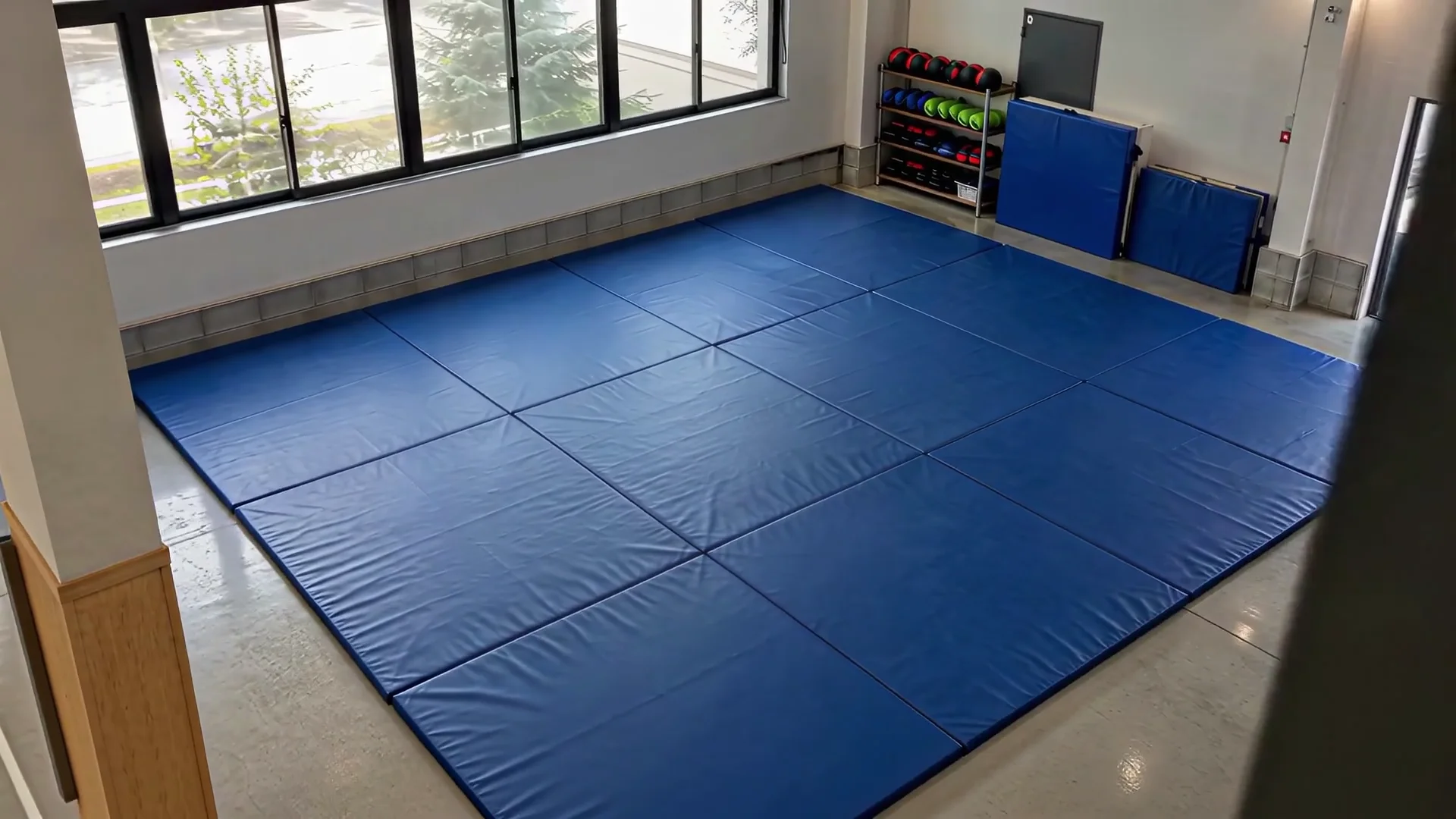
DLT-6301
Gym Mat Fabric
A woven polyester and PVC fabric for sports mat covers and gym floor protection trials.
- Weight
- 500-800gsm, 500-800gsm
- Width
- 58/60″, 1-3.2M
Product images
TECHNICAL DATASHEET
| Material | 100% Polyester, PVC+Polyester |
|---|---|
| Width | 58/60″, 1-3.2M |
| Technics | Woven |
| Feature | Memory, Waterproof, Flame Retardant, Anti-Static, Tear-Resistant, Heat-Insulation, Blackout, Fusible, Shrink-Resistant, Fluorescent |
| Certification | EN, Oeko-Tex Standard 100, SGS, ROHS |
| Yarn Count | 840*840D/1000*1000D, 840*840D/1000*1000D |
| Weight | 500-800gsm, 500-800gsm |
| Density | 18*18/23*23, 18*18/23*23 |
APPLICATIONS:
Product Features
- AntistaticHelps manage electrostatic charge build-up in the fabric, giving manufacturers a material option for assemblies with specified static-control requirements.
- Flame retardantA flame-retardant formulation for fabricators supplying projects with defined fire-behaviour requirements. Select the grade around the test method required for the finished application.
- BlockoutRestricts light passing through the fabric for roof, curtain or cover panels that need an opaque finish and greater control of the light behind the surface.
Choosing a Defined Construction
DLT-6301 offers ranges and alternatives for weight, yarn and density. They should be resolved into a selected configuration before comparing samples or preparing production. A 500–800gsm range is not one measured weight, and two yarn choices do not describe two simultaneous reinforcement layers. Record the chosen base and roll size together so the converter can repeat the material used in the approved cover sample.
The Cover and the Cushion
A gym mat combines its flexible cover with an internal cushion and an assembled edge system. DLT-6301 describes the cover material, so its reinforcement and PVC surfaces should be reviewed for that role. Include corners, seams and any connecting tabs in the sample. Requirements concerning cushioning, impact performance or complete mat safety need evidence for the assembled product rather than being inferred from the outer fabric alone.
Application requirements — Sports & Gym Mats
Specify the covered area, supporting surface, traffic, expected moisture and cleaning method. Review surface texture, wear, dimensional stability and the edge or joining arrangement. Slip performance depends on the finished surface and its use conditions; agree the required test method and contamination conditions before selecting the grade.
Finished Landing-Mat Configurations
Landing mats combine a cover with a selected cushioning core. The dimensions below describe finished mats, including the core thickness.
| Specification | Configuration |
|---|---|
| Compact Mat Example | 200 × 100 × 20 cm |
| Square Mat Example | 200 × 200 × 20 cm |
| Large Mat Example | 300 × 200 × 20 cm |
| Outer Cover | PVC cover fitted over the mat core |
| Panel Pattern | Top, base and side panels sized to the complete cushioning assembly |
| Mat Layout | Individual mats or an apparatus-specific set |
| Edges And Connections | Confirm joints between adjacent mats and any closure or handling details |
| Performance Review | Assess impact behaviour and stability on the finished mat with its intended core |
Construction Details
Cover Fit Around The Core
Cover size includes the side depth and the finished edge shape. It should be reviewed on the actual core.
Joining A Mat Set
Plan the complete landing area and the way neighbouring mats meet. Fabric properties alone do not determine impact performance.
Material Insights 3 videos
Heavier Isn't Always Stronger: Choosing PVC Tarpaulin
Material Guide
Discuss the application.
For gym mat fabric, confirm the selected construction, roll width and complete cover pattern before sampling.
PVC and Polyester Cover Material for Gym Mats
DLT-6301 is listed as a woven polyester and PVC gym mat fabric. Its record gives a 500–800gsm weight range, with 840D × 840D or 1000D × 1000D yarn and 18 × 18 or 23 × 23 constructions. These entries describe available configurations rather than one fixed combination in every roll. Select the actual yarn, weave and weight together when requesting a sample so that the material under review has a defined specification.
Woven describes the textile base; it does not identify how PVC is applied or bonded to it. The current sheet does not name a coating or lamination route. In a mat cover, the polyester reinforcement and PVC component form the flexible outer material, while the foam or other insert beneath it provides a separate part of the finished construction. Fabric weight alone does not establish impact absorption, cushioning or the overall safety performance of an assembled gym mat.
Widths are listed at 58/60 inches and within a broader 1–3.2m range. Confirm the chosen roll size against the panel pattern, seam positions and edge arrangement. Gym mat cover panels may meet at corners, folds or connecting details where the local assembly differs from a flat sheet. Review a sample around those features with the intended cleaning and use conditions. Where a project requires a particular fire, chemical or other performance standard, obtain the applicable documentation for the selected construction instead of treating the broad catalogue feature list as a complete test report.