
DLT-6102
Oil Boom Fabric
A vinyl-coated polyester composite for fabricating oil containment boom panels.
- Weight
- 550gsm
- Width
- 1-3.2Meters
Product images
TECHNICAL DATASHEET
| Material: | Vinyl coated polyester fabric, 100% Polyester |
|---|---|
| Base fabric: | 1000DX1000D 18X12 |
| Weight: | 550gsm |
| Surface lacqure: | Single side lacqure or double sides lacqure |
| Width: | 1-3.2Meters |
| Options: | Flame retardent B1/M2, Self cleaning surface |
APPLICATIONS:
Product Features
- Flame retardantOptionalAvailable as an optional configuration. A flame-retardant formulation for fabricators supplying projects with defined fire-behaviour requirements. Select the grade around the test method required for the finished application.
- Self-cleaning surfaceOptionalAvailable as an optional configuration. The surface finish helps dirt release from the coated face, supporting the appearance and routine care of exposed fabric panels.
What the 550gsm Value Represents
DLT-6102 is listed at 550gsm for the complete vinyl coated polyester sheet. The reinforcement specification adds yarn size and weave count, while the lacquer entry identifies a surface option. These details should be read together rather than using weight as a complete description. The present record does not establish a different reinforcement pattern from another model simply because the listed total mass is different.
Specifying the Converted Boom Panel
Oil containment boom panels may include folds, long seams and reinforced connection areas. Discuss those details with the selected DLT-6102 finish in hand. A straight sheet sample cannot represent every assembled connection or operating condition. Review the liquid contact and deployment arrangement as part of the material selection, and keep the completed boom specification separate from the coated fabric’s own construction and measured properties.
Application requirements — Oil Containment Booms
Specify the boom section dimensions, skirt depth, buoyancy arrangement, connector design and the expected water and handling conditions. Review compatibility with the intended liquid, coating adhesion, flexing, tear behaviour and seam integrity. Buoyancy, stability and containment performance must be assessed on the finished boom, separately from the fabric data sheet.
Finished Foam-Float Boom Configurations
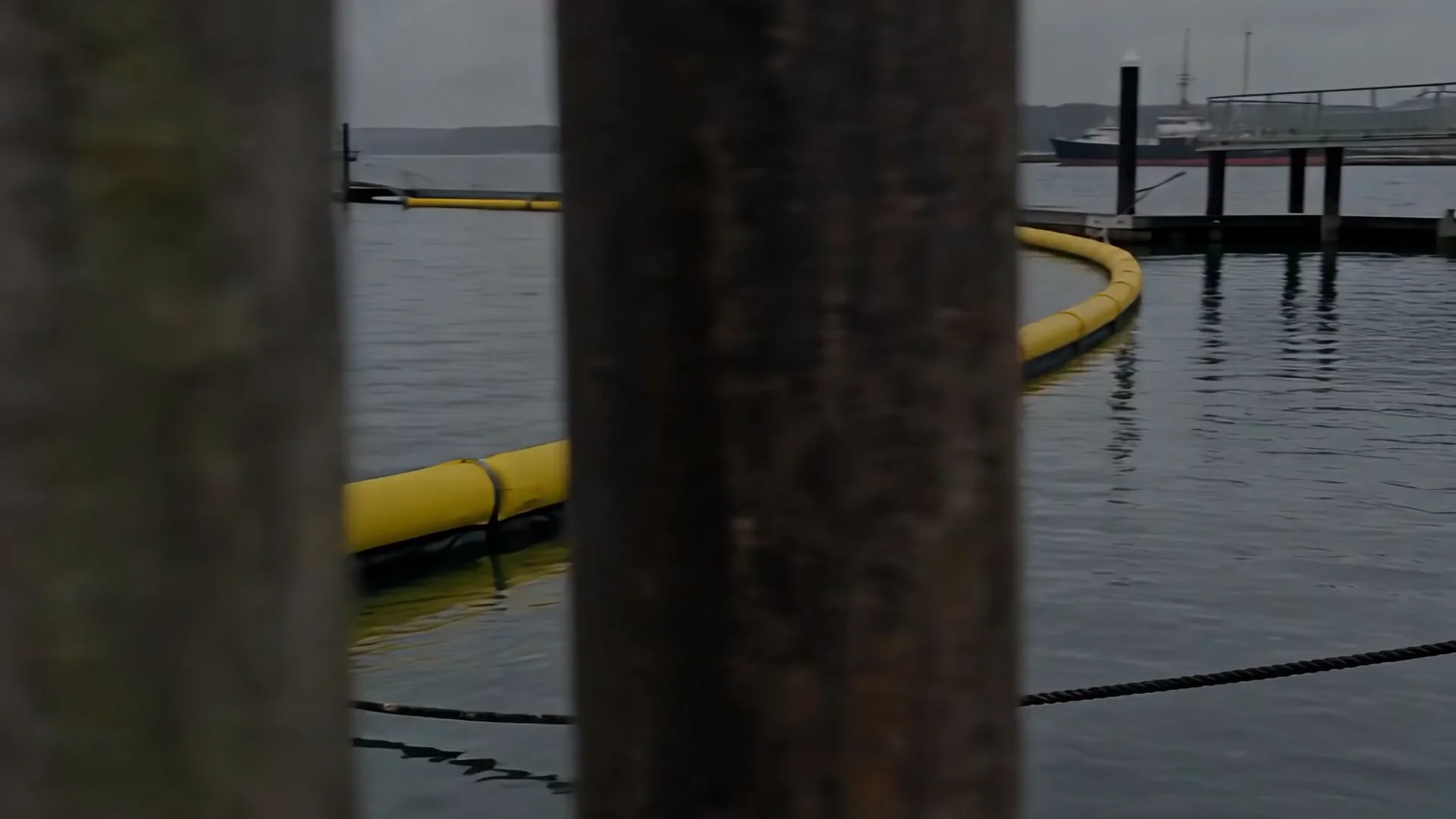
The freeboard and submerged skirt together define the boom's overall depth. Select the complete assembly around the water conditions.
| Specification | Configuration |
|---|---|
| Section Length Examples | 15 m or 25 m |
| 450 mm Overall Depth | 150 mm freeboard and 300 mm draught in the example configuration |
| 750 mm Overall Depth | 250 mm freeboard and 500 mm draught in the example configuration |
| 900 mm Overall Depth | 300 mm freeboard and 600 mm draught in the example configuration |
| Float Construction | Closed-cell foam floats enclosed along the upper section |
| Skirt And Ballast | Fabric skirt with lower chain ballast; stiffeners help retain its upright form |
| Section Ends | Compatible end connectors, with separate anchoring and towing arrangements |
| Handling | Top handles and a storage arrangement suited to the assembled boom |
Construction Details
Float, Skirt And Chain
The float provides buoyancy while the lower chain helps hold the skirt down. The fabric encloses and connects these components.
End Connections
Match connectors between adjacent sections and specify the anchoring arrangement for the deployment site.
Material Insights 3 videos
Heavier Isn't Always Stronger: Choosing PVC Tarpaulin
Material Guide
Discuss the application.
For oil boom fabric, send the panel and connector layout with the expected exposure and joining method.
Oil Boom Fabric: Woven Reinforcement and Finished Faces
DLT-6102 is a 550gsm vinyl coated polyester fabric with a 1000D, 18 × 12 woven reinforcement. The yarn network sits within the coated composite, supporting the flexible sheet across its two fabric directions. The stated material weight includes the complete coated sheet. It does not specify the individual mass of the polyester base, vinyl layers or surface finish, so those components should not be assigned proportions from the total alone.
The product record lists lacquer on one or two sides. This is a finish choice to specify, rather than a separate proof of a particular production route. The main material is described as vinyl coated polyester; knife coating is not identified. During conversion, the fabric is cut and joined into the proposed oil containment boom panels, with reinforced areas around connections or other concentrated loads. Trials should use the chosen lacquer configuration and actual joining process.
Widths of 1–3.2m are listed. The width can be considered alongside the panel shape and seam arrangement, but the finished boom also requires a buoyancy system, skirt, ballast and suitable connections. A heavier sheet does not automatically define a larger containment area or a higher operating rating. For an oil boom material review, identify the expected liquid exposure, deployment conditions and the intended panel construction. Then assess the selected composite and representative seams together. Any requirement for oil resistance, environmental exposure or complete barrier performance needs its own relevant evidence.