
DLT-5706
Vinyl Coated Polyester Fabric for Tarp Reinforcement Panels
Knife-coated PVC faces over a woven polyester core for truck and equipment covers.
- Weight
- 1000gsm
- Width
- 1.05-3.2m
Product images
TECHNICAL DATASHEET
| Technology: | Knife Coated |
|---|---|
| Structure: | PVC coating+polyester base fabric+PVC coating |
| Base fabric: | 1000*1000D 30*30 |
| Weight: | 1000gsm |
| Width: | 1.05-3.2m |
| Roll length: | 50m/100m |
| Surface: | Glossy/Matte |
| Blockout: | Extra blockout layer available |
| Tensile Strength | 4000/4000 N/5cm DIN53354 |
| Tear Strength | 600/500 N/5cm DIN53356 |
| Adhesion | 140 N/5cm DIN53357 |
| Colour: | Customized |
| Temperature: | -20~+70(°C) |
| FR certification: | Customized B1, B2, M1, M2, NFPA701, DIN75200; |
| Packing: | Paper tube+PE film+Craft paper |
| MOQ: | 3000meters for customization |
APPLICATIONS:
Product Features
- Flame retardantOptionalAvailable as an optional configuration. A flame-retardant formulation for fabricators supplying projects with defined fire-behaviour requirements. Select the grade around the test method required for the finished application.
- BlockoutOptionalAvailable as an optional configuration. Restricts light passing through the fabric for roof, curtain or cover panels that need an opaque finish and greater control of the light behind the surface.
The Material Within a Reinforcement Piece
A patch cut from DLT-5706 retains the same PVC and polyester construction as the roll. Its 1000D yarns, 30×30 base and listed strength values describe the unjoined material. The 1000gsm figure gives finished mass per area, without separating coating and textile weights. Orientation and patch shape should remain on the cutting record so the attached piece can be evaluated against the surrounding tarp.
Joining Two Composite Surfaces
A reinforcement creates a new joint between the patch face and the main panel. The roll material’s adhesion result describes its internal coating bond, while the patch attachment needs a separate sample review. Use the selected surface finish and the proposed joining method for that trial. Pay attention to the transition at the patch edge, where the local thickness changes as the assembly bends.
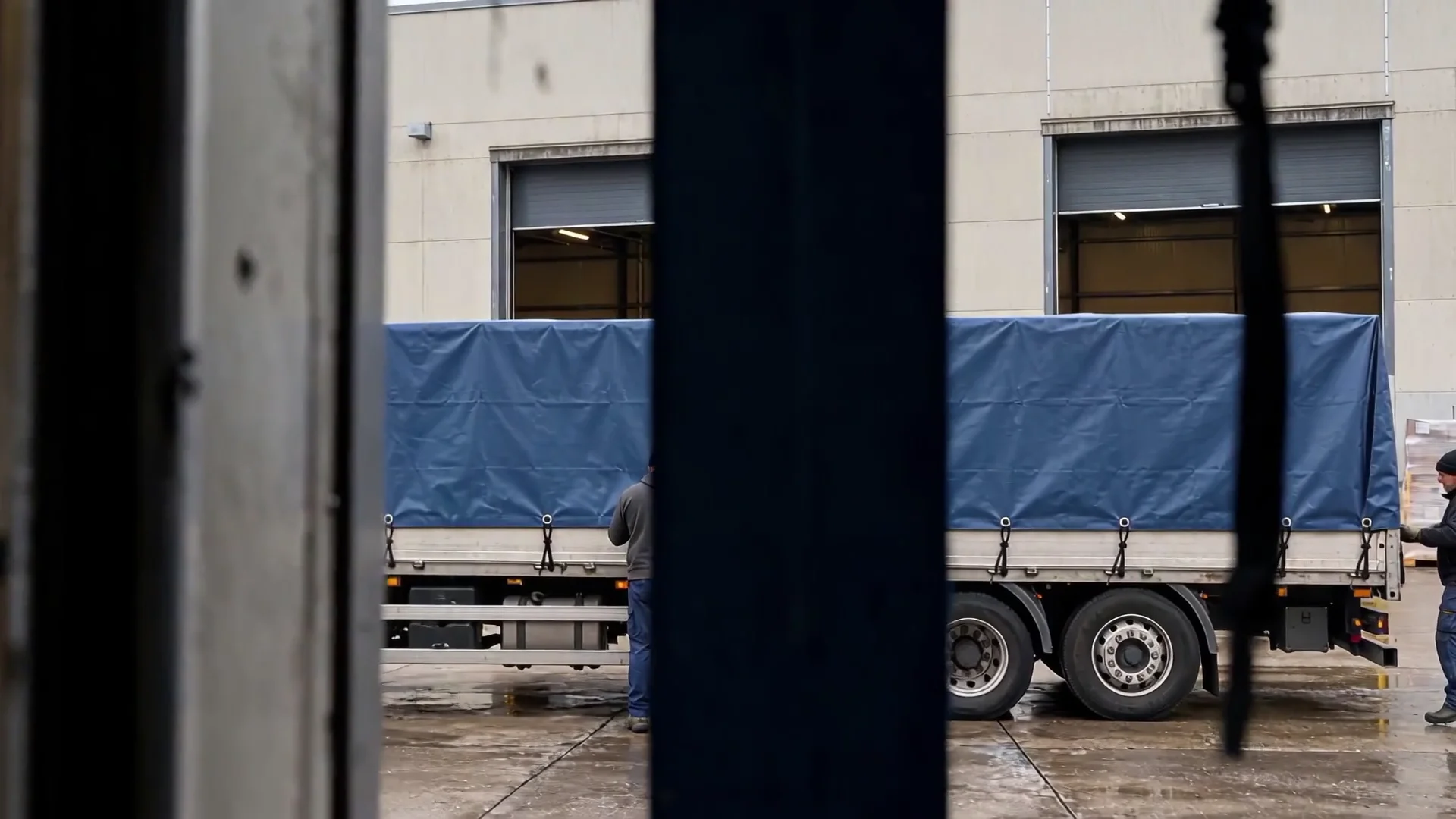
Application requirements — Truck Covers
Specify the finished cover dimensions, fixing arrangement, folding or rolling pattern and operating environment. Review tensile and tear properties, coating adhesion, abrasion at contact areas and the strength of seams and reinforced edges. State the required surface finish, flexibility and weathering conditions, and assess a sample in the proposed assembled construction.
Finished Flatbed-Tarp Configurations
The following dimensions describe a flatbed lumber tarp. Side curtains and roll-over roofs use their own body and hardware drawings.
| Specification | Configuration |
|---|---|
| Flat Size Example | 24 × 27 ft (approximately 7.32 × 8.23 m) |
| Side Drop Example | 8 ft (approximately 2.44 m) |
| End Flap Example | 8 × 8 ft (approximately 2.44 × 2.44 m) |
| Panel Seams | Heat-sealed body seams |
| Edge Construction | Double-stitched hems reinforced with 2 in (approximately 51 mm) webbing |
| Eyelet Spacing Example | 2 ft (approximately 610 mm) around the specified edges |
| Tie-Down Arrangement | Three D-ring rows with protective flaps in this configuration |
| Fit And Restraint | Set the cover around the actual load dimensions; cargo restraint is specified separately |
Construction Details
Reinforced Hem
The webbing runs within the hem to support the eyelets and stitched edge. Confirm corner and end-flap reinforcement on the finished drawing.
Protected D-Ring Attachment
D-rings are attached through reinforced areas, with flaps separating hooks from the tarp face. Choose ring positions to suit the load height and tie-down route.
Product Videos 3 videos
Truck Side-Curtain Fabric Production
Production & Material Footage
Discuss the application.
For vinyl coated polyester fabric rolls, share the reinforcement layout and parent tarp material so representative joined samples can be reviewed.
Vinyl Coated Polyester Fabric for Reinforced Panels
DLT-5706 has PVC faces around a 1000×1000D polyester base with a 30×30 construction. The material is specified at 1000gsm and produced by knife coating. This is a reinforced flexible composite: the continuous faces cover the textile, and the woven core provides reinforcement in both fabric directions. The sheet should be assessed as that combined structure.
The coating process applies PVC paste directly to the base cloth. A blade controls the coating build, and heating forms the finished PVC layer. Coating adhesion is therefore a useful property alongside the textile strength. DLT-5706 lists 140N/5cm adhesion, 4000/4000N/5cm tensile strength and 600/500N/5cm tear strength, each describing a different aspect of the material.
A reinforcement panel introduces another interface when it is attached to the main tarp. The strength of the unjoined roll material cannot describe that connection by itself. Review the patch direction, overlap and edge shape using representative samples. The specification does not list a thickness for this model, so one should not be calculated from its 1000gsm mass.
The stated widths are 1.05m to 3.2m, with 50m or 100m roll lengths. Glossy and matte surfaces are listed and an additional blockout layer is available. Confirm the surface and full construction before establishing a joining method. When cutting reinforcement pieces, preserve their orientation in the roll and assess the finished junction against the handling expected in the proposed tarp assembly.