
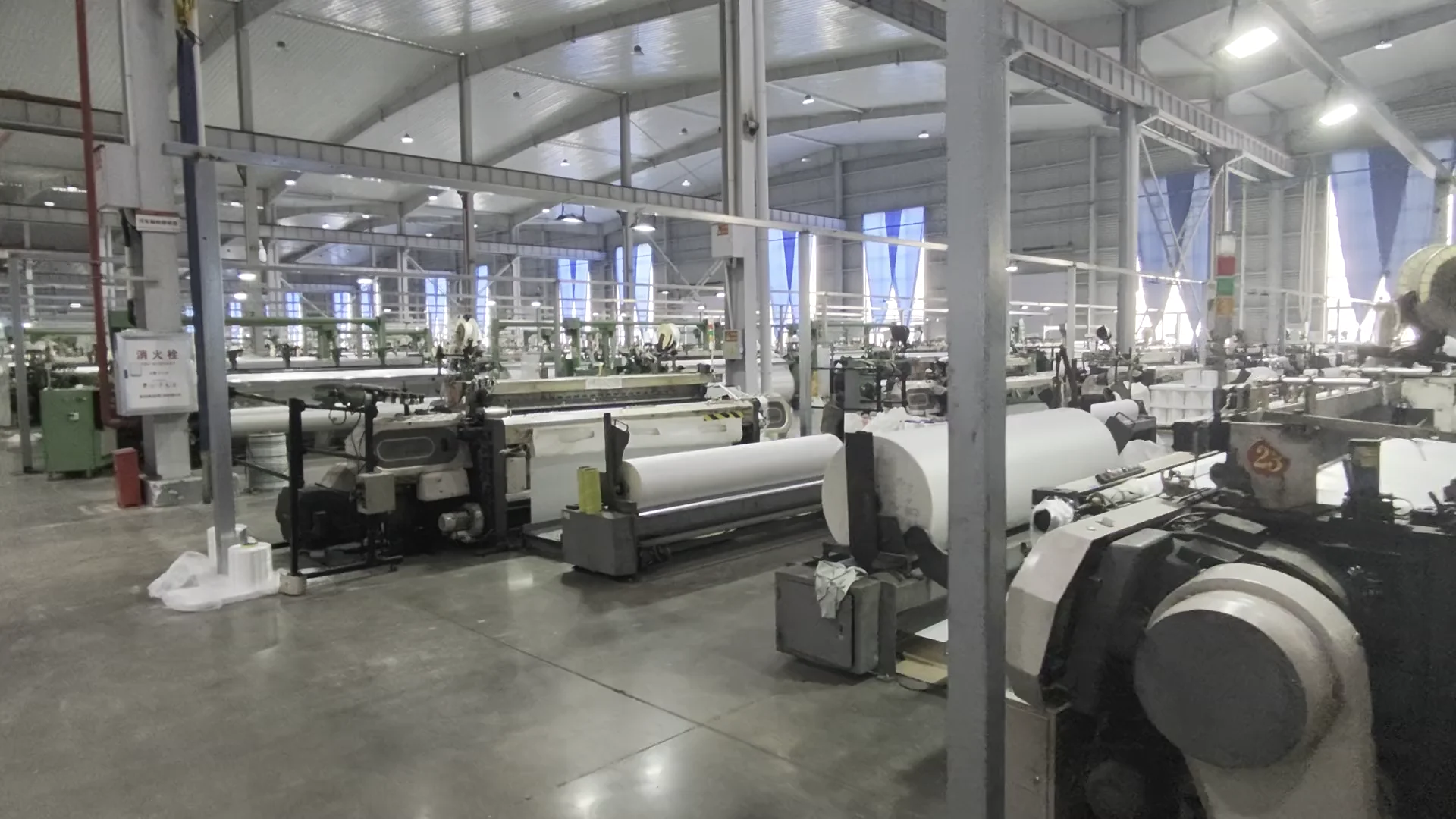
Polyester base fabric
Woven Fabric for Tarpaulin Reinforcement
A plain-weave polyester fabric used as reinforcement for tarpaulin coating or lamination.
- Width
- 1.05-5.1m
- Base fabric
- 1000D*1000D/30*30
Product images
TECHNICAL DATASHEET
| Technology: | Plain woven |
|---|---|
| Base fabric: | 1000D*1000D/30*30 |
| Tearing Strength (N/5cm) | 1400-1700 |
| Tensile Strength (N/5cm) | 4000-4500 |
| Elongation Rate (%) | 12-15 |
| Width: | 1.05-5.1m |
| Roll length: | According to request |
APPLICATIONS:
Product Features
- Plain weaveWarp and weft yarns interlace in a regular plain-weave pattern.
- Polyester reinforcement baseThe woven polyester serves as the reinforcing layer for subsequent coating or lamination.
Plain Woven Polyester Reinforcement
The supporting fabric uses 1000D yarns in both directions with a listed 30×30 construction. Plain weave gives an interlaced textile that is distinct from warp knitted mesh or a polymer film. Review the actual fabric with its warp direction identified. The yarn and construction notation help specify the base, while the chosen coating or film must be documented separately in the finished tarpaulin construction.
Validate The Finished Composite Separately
A base fabric becomes part of a different material after coating or lamination. Polymer coverage, bonding and the later fabrication all affect what the buyer ultimately receives. Trial this woven polyester with the intended production route and test the resulting composite against its application requirements. Keep the base specification alongside the approved finished sample rather than treating the raw fabric figures as performance values for every completed cover.
Application requirements
Specify yarn construction, fabric width, mass, dimensional stability and the downstream coating or lamination process. Review tensile and tear properties, surface condition and process compatibility on a representative sample. Keep the base-fabric specification separate from the properties required of the final coated composite.
Finished Reinforced-Fabric Configuration
Woven polyester forms the reinforcement inside coated or laminated products. Specify the finished composite alongside the base-cloth requirements.
| Specification | Configuration |
|---|---|
| Conversion Route | PVC coating or lamination with pre-formed PVC films |
| Layer Arrangement | Reinforcement with the specified surface layer on one or both faces |
| Fabric Direction | Mark warp and weft for the later panel-cutting layout |
| Finished Dimensions | Define usable composite width and the intended panel dimensions |
| Surface Requirements | Agree coating coverage, appearance and the required finish |
| Bond Evaluation | Check adhesion between the reinforcement and the surface layer |
| Fabrication Trial | Review cutting and seam formation on the finished composite |
| Final Product Checks | Evaluate the complete construction against its stated use |
Construction Details
Reinforcement Within The Composite
The woven cloth provides the textile structure. The coating or laminated films establish the finished surfaces.
From Composite To Panel
Keep the fabric direction visible in the cutting plan and assess the joint on the converted material.
Product Videos 1 video
Woven Polyester Base Fabric
Product Overview
Discuss the application.
For woven fabric rolls, confirm the reinforcement width, coating or lamination route and required composite tests.
Woven Fabric For Tarpaulin Reinforcement
This woven fabric is a polyester base for tarpaulin reinforcement. Its listed construction is 1000D×1000D with a 30×30 notation, made by plain weaving. Warp yarns run along the fabric and weft yarns cross them, interlacing in a regular over-and-under structure. The resulting textile is a supporting component that can be combined with a separate coating or film.
The product is described as base fabric, with no PVC coating included in the stated construction. Plain woven polyester alone should therefore not be treated as a finished waterproof tarpaulin. In a later composite, the polymer layer provides a continuous surface while the textile contributes reinforcement. The final result depends on the selected components and the bond developed between them during coating or lamination.
The 1000D figures describe yarn linear mass in the two directions. The 30×30 notation records fabric construction, although its count unit should be confirmed when comparing sources. Neither description replaces the relevant measured strength data. The listed mechanical values belong to this base fabric and should not be transferred directly to a coated sheet, sewn panel or fabricated cover.
Widths are listed from 1.05m to 5.1m, with roll length to be agreed. Before selecting tarpaulin reinforcement fabric for production, trial it with the intended polymer and process. Inspect coating coverage or laminate bond and evaluate the finished composite using the required test method. Preserve the base fabric identity in the production record so later material changes can be assessed against the approved construction.