
DLT-5309
Duct Reinforcement Fabric
A polyester-reinforced PVC composite for evaluating reinforcement strips on flexible ventilation ducts.
- Weight
- 600g(±10g)/sqm
- Width
- 1.02m-3.2m
Product images
TECHNICAL DATASHEET
| Structure: | PVC film+Polyester base fabric+PVC film |
|---|---|
| Base fabric: | 1300D |
| Width: | 1.02m-3.2m |
| Weight: | 600g(±10g)/sqm |
| Colour: | Black/Yellow/RAL1018 or customized |
| Flame retardant: | Self-extinguishing |
| Anti-static: | <200 megohm or 1×10^8Ω |
| Tearing strength: | 2200/1900(N/5cm) |
| Tensile strength: | 240/220(N/5cm) |
| Adhesive Strength | 80(N/5cm) |
| Suitable temperature: | -20° to +70° |
| Package: | Paper tube + Foam sheet +PE film |
| Meter per roll: | 30m-506m |
APPLICATIONS:
Product Features
- AntistaticHelps manage electrostatic charge build-up in the fabric, giving manufacturers a material option for assemblies with specified static-control requirements.
- Flame retardantA flame-retardant formulation for fabricators supplying projects with defined fire-behaviour requirements. Select the grade around the test method required for the finished application.
Composite Strip Rather Than Bare Scrim
DLT-5309 includes PVC faces around its 1300D polyester base. A strip cut from this sheet therefore adds both reinforcement and covering material to the original duct. Its 600gsm nominal mass covers all those layers. Confirm the existing surface and joining compatibility before treating the material as an added layer; the internal sheet adhesion value does not establish the strength of that new attachment.
Assessing the Proposed Wear Area
Choose a DLT-5309 strip layout from the actual contact zones and expected duct movement. A representative assembly should include the strip ends and edges, where attachment details can affect behaviour. No abrasion-life result is supplied, so wear-strip suitability remains a proposed application requiring assessment. Any static or fire requirement must also be agreed for the completed construction rather than inherited from a brief material description.
Application requirements — Ventilation Ducts
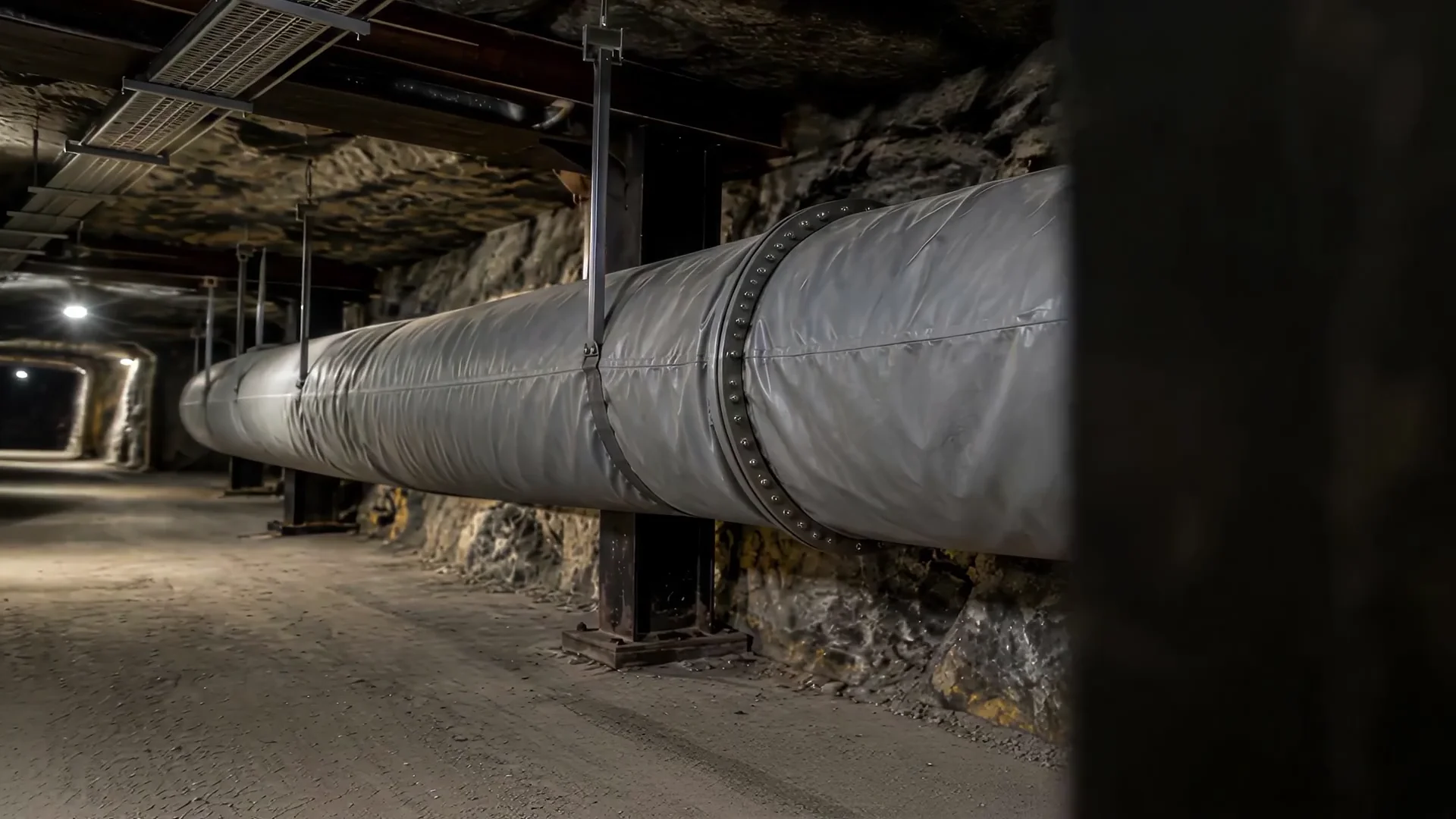
Specify duct diameter and section length, positive or negative operating pressure, airflow conditions, connector design and suspension spacing. Review tensile and tear properties, coating adhesion, seam integrity and leakage in the assembled duct. Identify any required fire behaviour, static-control and temperature criteria for the installation; these must be checked against the selected configuration and applicable test evidence. Another application is dog play and agility tunnels. For these, specify the tunnel diameter, length, support hoops, anchoring and cleaning needs; assess the seams and the finished tunnel around the intended dogs and setting.
Common Finished Ventilation Duct Specifications
| Specification | Typical Configuration |
|---|---|
| Duct Construction | Layflat blowing duct; spiral-reinforced duct for extraction or bends |
| Layflat Diameter Examples | 300–3000 mm nominal diameter |
| Layflat Section Lengths | 5, 10, 20, 30 or 50 m sections |
| Reinforced Duct Examples | 250–1400 mm diameter; 5 or 10 m sections |
| Section Connections | Zip, hook-and-loop, reinforced eyelet or end-ring connections |
| Suspension | Welded suspension fins or reinforced patches on layflat ducts; rings on reinforced ducts |
| Seams And Attachment Areas | Welded body seams, sealed connection sleeves and reinforced suspension areas |
| Operating Duty | Define blowing or extraction, fan airflow, static pressure and installed length together |
Duct Construction And Connections
A welded top fin carries the suspension points. The end sleeve seals the connection between sections.
The reinforcement supports the duct wall during extraction. Wire specification and pitch follow the suction duty.
Product Videos 3 videos
Antistatic Tarpaulin: Material Demonstration
Production & Material Footage
Discuss the application.
For duct reinforcement fabric rolls, identify the existing duct surface, proposed strip layout and attachment method.
Duct Reinforcement Fabric: Planning a Compatible Added Layer
DLT-5309 is listed at 600gsm with a ±10gsm tolerance and uses a 1300D polyester base. The stated structure consists of PVC film, the reinforcing textile and another PVC film face. It is a complete composite sheet rather than bare reinforcing yarn, which matters when considering an added strip on an existing duct surface.
A proposed duct wear strip introduces a second interface: the bond or seam between the strip and the original duct. That interface is different from the film-to-textile bond within DLT-5309. Confirm the existing duct material and surface treatment before selecting the attachment method. The sheet specification does not establish compatibility with every duct, and no measured abrasion-life result is provided.
Black and yellow RAL 1018 are listed along with custom colour and a stated width range of 1.02m to 3.2m. The source includes self-extinguishing and antistatic descriptions, which need defined evidence for the supplied version where relevant. Its static-resistance expressions require clarification. The tensile and tear entries also need verification and are not a sound basis for making a reinforcement load claim as currently presented.
For a proposed strip layout, identify the contact or rubbing areas, strip dimensions and edge termination. A trial on a representative duct section can assess the chosen seam or bond and the way the added material bends with the underlying sheet. Reinforcement placement should follow the actual duct design. An extra layer may alter local handling, so its suitability needs assessment in the finished assembly.