
DLT-5307
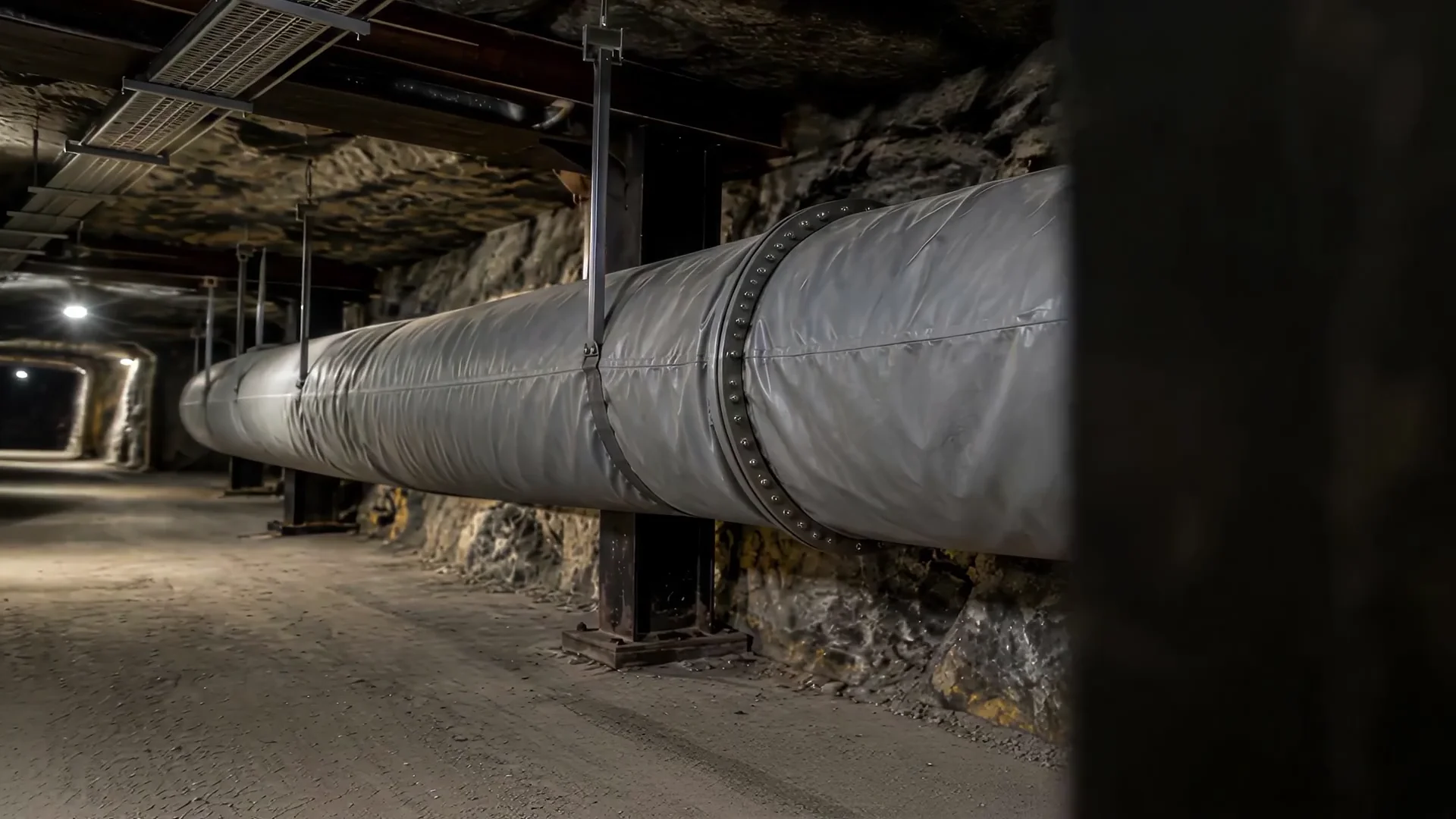
Dehumidifier Duct Fabric
A PVC composite with different polyester yarn sizes in the two fabric directions for flexible ventilation ducts.
- Weight
- 700g(±10g)/sqm
- Width
- 1.02m-3.2m
Product images
TECHNICAL DATASHEET
| Structure: | PVC film+Polyester base fabric+PVC film |
|---|---|
| Base fabric: | 1000x2000D |
| Width: | 1.02m-3.2m |
| Weight: | 700g(±10g)/sqm |
| Colour: | Black/Yellow/RAL1018 or customized |
| Flame retardant: | Self-extinguish |
| Tensile strength: | 2200/1900(N/5cm) |
| Tearing strength: | 240/220(N/5cm) |
| Peeling off strength: | 80(N/5cm) |
| Suitable temperature: | -20° to +70° |
| Package: | Paper tube + Craft paper |
| Meter per roll: | 30m-506m |
APPLICATIONS:
Product Features
- Flame retardantA flame-retardant formulation for fabricators supplying projects with defined fire-behaviour requirements. Select the grade around the test method required for the finished application.
A Base With Different Yarn Sizes
The 1000×2000D polyester base specified for DLT-5307 gives the reinforcing construction a clear directional reference. Preserve that reference during sample testing and cutting. The 700gsm nominal mass describes the finished PVC-and-textile sheet, while yarn size describes only the reinforcement. Compare the actual material and directional test information together; the denier entry by itself is not a strength rating for an assembled duct.
Material Choice for an Air-Duct Assembly
A dehumidifier duct adds seams and end connections to DLT-5307. Evaluate those fabricated details with the actual air conditions and required dimensions in mind. The sheet’s film-to-textile bond is not a substitute for testing the selected seam. If fire performance is required, agree the applicable evidence for the supplied version. No antistatic rating is listed for this model and none is assumed in its description.
Application requirements — Ventilation Ducts
Specify duct diameter and section length, positive or negative operating pressure, airflow conditions, connector design and suspension spacing. Review tensile and tear properties, coating adhesion, seam integrity and leakage in the assembled duct. Identify any required fire behaviour, static-control and temperature criteria for the installation; these must be checked against the selected configuration and applicable test evidence. Another application is dog play and agility tunnels. For these, specify the tunnel diameter, length, support hoops, anchoring and cleaning needs; assess the seams and the finished tunnel around the intended dogs and setting.
Common Finished Ventilation Duct Specifications
| Specification | Typical Configuration |
|---|---|
| Duct Construction | Layflat blowing duct; spiral-reinforced duct for extraction or bends |
| Layflat Diameter Examples | 300–3000 mm nominal diameter |
| Layflat Section Lengths | 5, 10, 20, 30 or 50 m sections |
| Reinforced Duct Examples | 250–1400 mm diameter; 5 or 10 m sections |
| Section Connections | Zip, hook-and-loop, reinforced eyelet or end-ring connections |
| Suspension | Welded suspension fins or reinforced patches on layflat ducts; rings on reinforced ducts |
| Seams And Attachment Areas | Welded body seams, sealed connection sleeves and reinforced suspension areas |
| Operating Duty | Define blowing or extraction, fan airflow, static pressure and installed length together |
Duct Construction And Connections
A welded top fin carries the suspension points. The end sleeve seals the connection between sections.
The reinforcement supports the duct wall during extraction. Wire specification and pitch follow the suction duty.
Product Videos 3 videos
Antistatic Tarpaulin: Material Demonstration
Production & Material Footage
Discuss the application.
For dehumidifier duct fabric rolls, specify the air conditions, duct dimensions and preferred connection arrangement.
Dehumidifier Duct Fabric: Two Yarn Directions Within the Sheet
DLT-5307 is a 700gsm PVC composite with a stated ±10gsm tolerance. Its polyester base is listed as 1000×2000D, identifying different nominal yarn sizes in the two directions. PVC film faces surround the textile. The finished mass describes all of those components together, while the reinforcing entry describes the base within the sheet.
Keeping the two fabric directions identifiable is useful when evaluating samples and preparing duct panels. Yarn size alone does not determine the sheet’s tensile or tear performance, and the listed test figures should retain their directional context. The bond between film and textile is a separate property from the seam introduced during fabrication. The available specification does not identify a precise manufacturing route.
Black and yellow RAL 1018 are listed, with custom colour available within a stated 1.02m to 3.2m width range. The source describes the material as self-extinguishing; an applicable classification needs supporting evidence for the ordered configuration. There is no listed antistatic property for this model, so one should not be carried over from another material in the duct family.
For proposed dehumidifier air ducts, define the air conditions, duct dimensions and connection arrangement before sample approval. Fabrication trials should use the intended panel direction and joining method, including representative end connections. Check folding and handling in the planned layout rather than treating a flat sheet sample as a complete duct. The finished air-delivery system requires its own assessment of operating temperature and pressure.