
DLT-70006
PVC Film for Document Sleeves
A single-layer calendered clear PVC film for converting into document sleeves.
- Width
- 0.65-1.83m
- Thickness
- 0.06mm
Product images
TECHNICAL DATASHEET
| Technology: | Calendering |
|---|---|
| Structure: | Single layer PVC film |
| Surface: | Glossy/Matte |
| Hardness: | 20-60PHR According to customer’s requirements |
| Vicat softening point: | 75°C |
| Thickness: | 0.06mm |
| Width: | 0.65-1.83m |
| Roll length: | 100m |
| Packing: | PE foam or kraft paper with clear film or color film; 3 inches paper tube |
| Certification: | EN71-2; EN71-3; Reach Standard; Anti UV; Anti Cold; Anti Static; Fire Retardent |
APPLICATIONS:
Product Features
- AntistaticHelps manage electrostatic charge build-up in the fabric, giving manufacturers a material option for assemblies with specified static-control requirements.
- Flame retardantA flame-retardant formulation for fabricators supplying projects with defined fire-behaviour requirements. Select the grade around the test method required for the finished application.
- UV resistantUV-resistant treatment addresses sunlight exposure in outdoor fabric panels, making weathering requirements part of the material choice from the start.
A 0.06mm Single-Layer Film
DLT-70006 is film throughout its thickness, with no textile core listed. That makes the quality of a cut edge and the shape of an opening relevant during sleeve development. The 0.06mm gauge describes the section thickness, while the selected formulation determines its hand. Review a finished edge using the proposed joining process and confirm tolerances before treating a sample as the production reference.
Calendering And Surface Selection
Calendering forms PVC compound into a sheet between rolls. For DLT-70006, the listed surface choices are glossy and matte. Check each finish with the intended document inside the sleeve, since reflections can affect readability even when the film is transparent. Keep the approved finish and formulation with the order record so later roll deliveries can be compared with the same reference sample.
Application requirements — Clear Packaging
Specify the finished size, contents, carried load, closure design and the way handles or straps attach. Review tear propagation, abrasion, coating adhesion and the reinforcement around seams and attachment points. Agree the intended water-exposure level and a finished-bag test method rather than inferring protection from the sheet material alone.
Finished Clear-Packaging Specifications
These thin clear-film grades are listed for packaging. Define the pack around the folded product and confirm the sealing process on the selected film.
| Specification | Configuration |
|---|---|
| Finished Width | Set from the packed product, including insertion clearance |
| Finished Height | State the usable body height separately from any closure flap |
| Depth | Flat pack or gusseted pack, according to the folded contents |
| Closure | Specify an open mouth, folded flap or separately fitted closure |
| Sealed Edges | Show the side and bottom seals on the bag drawing |
| Printed Area | Locate graphics and product information away from the seal |
| Seal Trial | Confirm seal continuity and film appearance with the actual film grade |
| Packing Sample | Approve the filled pack, opening and final outside dimensions |
Construction Details
Measure The Packed Contents
Use the folded product dimensions to define the bag. A bedding size alone does not establish the package size.
Film And Seal Compatibility
Trial the selected film on the converter’s sealing equipment before locking the seam and closure design.
Product Videos 1 video
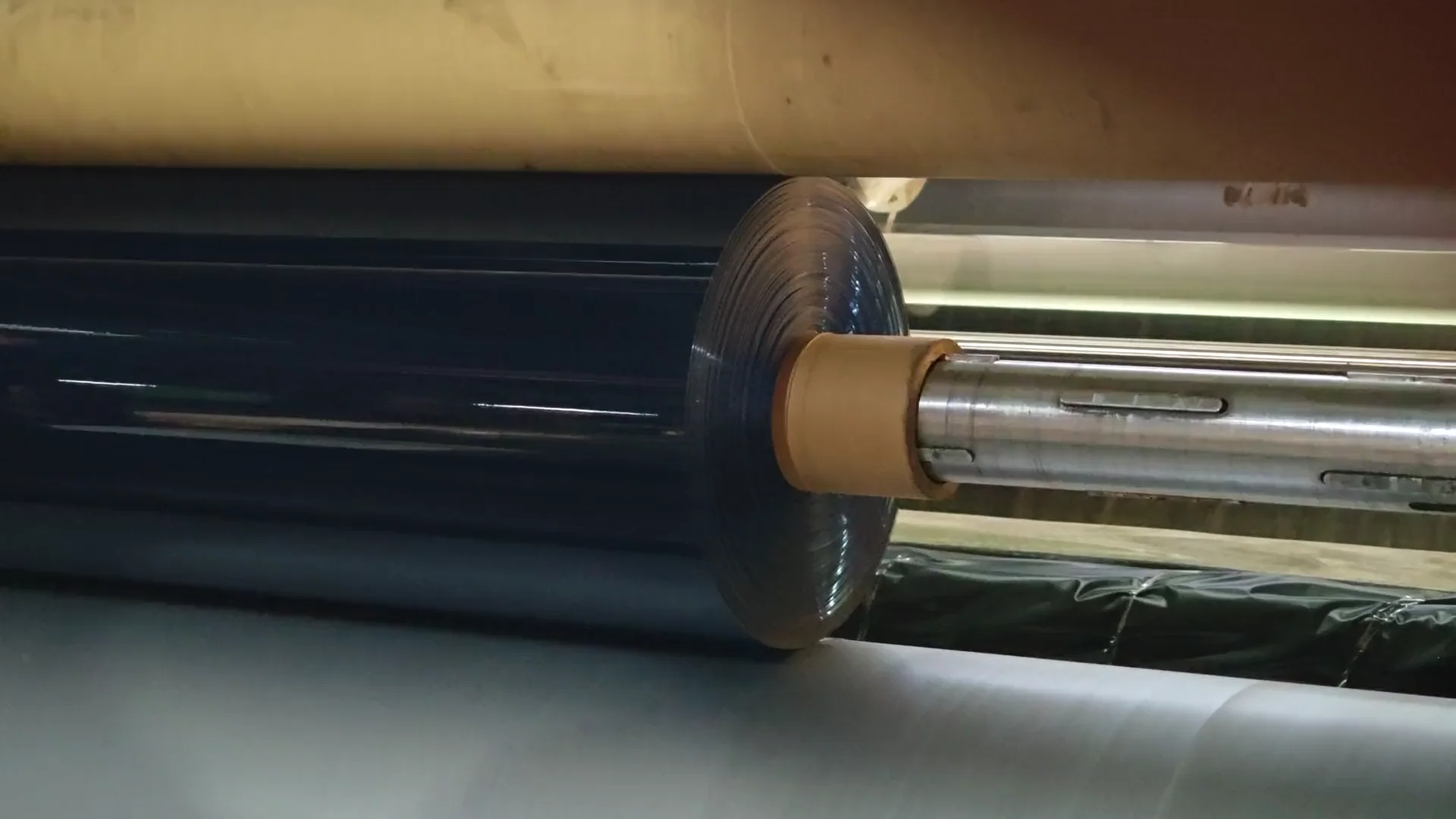
Normal Clear PVC Film: Material Demonstration
Production & Material Footage
Discuss the application.
For PVC film rolls, specify sleeve dimensions, surface finish, gauge tolerance and the intended converting process.
PVC Film Without A Textile Reinforcing Layer
DLT-70006 is a single-layer PVC film produced by calendering. Its specified thickness is 0.06mm, with no woven or knitted reinforcing base in the listed structure. The sheet therefore behaves as a flexible film when it is cut and joined. For document sleeves, that construction should be considered around the opening and seam, where a small area of film receives much of the repeated handling.
Calendering forms a plastic compound into a continuous sheet through a sequence of rolls. The film gauge and surface are controlled during that forming process. DLT-70006 is offered with glossy or matte surfaces and a listed formulation range of 20-60PHR. PHR describes the proportion of plasticizer relative to resin in the formulation; it is not a direct Shore hardness reading and should be agreed with the supplier alongside a hand-feel sample.
Thickness alone does not describe the complete film response. Formulation affects softness, while surface finish changes reflections and the appearance of an inserted document. Compare a finished sleeve with the intended paper and closure detail. Where storage appearance matters, include the expected stack of sleeves in the review so the selected finish is judged in normal use rather than only as a single sheet held to the light.
Listed widths are 0.65-1.83m, with 100m rolls. Agree the useful width, gauge tolerance and packaging needed by the converting line. Any specified regulatory or performance option should be identified for the supplied configuration; the general list of available options does not replace documentation for the actual film order.