
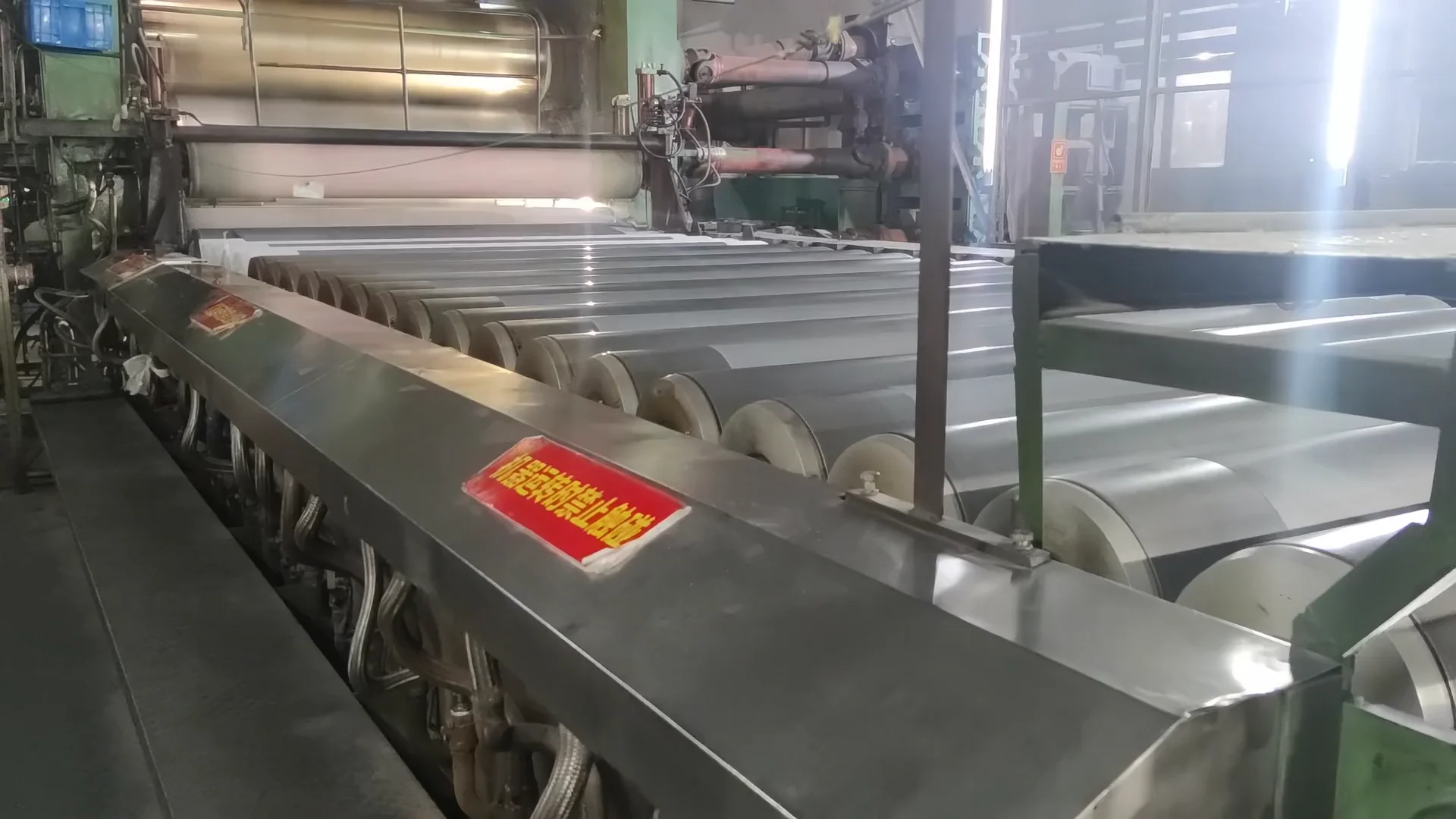
PVC film
PVC Films And Sheets for Textile Lamination
A single-layer calendered PVC film for laminating onto a textile base.
- Max width
- 5.1meters
- Thickness
- 0.18-0.5mm
Product images
TECHNICAL DATASHEET
| Technology: | Calendering |
|---|---|
| Structure: | Single layer PVC film |
| Hardness: | 20-60 PHR According to customer’s requirements |
| UV resistetant | 3.5 ASTM G154-06 Standard |
| Transparency: | 0-50% |
| Thickness: | 0.18-0.5mm |
| Max width: | 5.1meters |
| Vicat softening point: | 75°C |
| Packing: | PE foam or kraft paper with clear film or color film; |
| Options: | Reach/RoHS; Anti UV; Anti Cold; Anti Static; Fire Retardent |
APPLICATIONS:
Product Features
- AntistaticOptionalAvailable as an optional configuration. Helps manage electrostatic charge build-up in the fabric, giving manufacturers a material option for assemblies with specified static-control requirements.
- Abrasion resistantAn abrasion-resistant construction helps address rubbing and handling wear where the fabricated surface is exposed to repeated contact.
- Flame retardantA flame-retardant formulation for fabricators supplying projects with defined fire-behaviour requirements. Select the grade around the test method required for the finished application.
- UV resistantOptionalAvailable as an optional configuration. UV-resistant treatment addresses sunlight exposure in outdoor fabric panels, making weathering requirements part of the material choice from the start.
A Film Component For A Later Composite
The stated structure is single-layer PVC film with no woven core. It is supplied for combination with a separate textile when a reinforced laminate is required. Keep the film specification distinct from the finished composite: gauge, formulation and surface belong to the film, while base construction and bond quality belong to the complete laminate. A small production trial can document how those components work together.
Specify The Required Formulation Evidence
The product record offers several formulation-related options, including flame retardancy. State the required standard and supplied configuration when ordering rather than relying on the product name alone. A test on film does not automatically describe a later textile laminate, particularly after additional adhesives or finishes are introduced. Review the relevant documentation alongside the actual approved material and completed lamination sample before confirming the final construction.
Application requirements
Specify sheet thickness, panel dimensions, surface finish, flexibility and the proposed joining or mounting method. Review tear behaviour, handling, cleaning and temperature exposure. Where a fire-behaviour requirement applies, agree the exact test method and confirm that the supporting report covers the proposed formulation, thickness and installation.
Finished Laminate Configuration
This film is an input for reinforced laminates. Define the complete layer stack and the subsequent fabrication requirements with the converter.
| Specification | Configuration |
|---|---|
| Layer Stack | Top PVC film, reinforcement fabric and bottom PVC film in a three-layer construction |
| Reinforcement | Specify the polyester or other agreed substrate |
| Finished Composite Size | Set the usable width and cutting layout for the intended product |
| Surface Finish | Choose the required texture and appearance on each face |
| Bonding Process | Establish temperature, pressure and line settings by a material trial |
| Bond Quality | Inspect the laminate for separation, uneven bonding and surface defects |
| Downstream Fabrication | Confirm how the finished laminate will be cut and joined |
| Fire Requirements | Specify the test needed for the finished composite and obtain matching evidence |
Construction Details
Three-Layer Construction
The reinforcement sits between the two films. Bonding, embossing and cooling establish the finished laminate before winding.
Evaluate The Full Assembly
Review a sample made with the proposed film, substrate and process. Component descriptions alone do not establish the finished composite’s performance.
Material Insights 3 videos
Heavier Isn't Always Stronger: Choosing PVC Tarpaulin
Material Guide
Discuss the application.
For PVC films and sheets rolls, specify the gauge, textile base and required final-laminate test standard.
Calendered PVC Films And Sheets For Lamination
These PVC films and sheets are specified as a single-layer material made by calendering. The listed thickness range is 0.18-0.5mm, with widths up to 5.1m. There is no textile reinforcement in the stated film structure. When used for textile lamination, this sheet becomes one component of a later composite rather than arriving as an already reinforced tarpaulin.
Calendering forms PVC compound into a continuous film between rolls. The formulation and forming process establish the sheet that a laminator subsequently combines with a separate fabric. Overall film gauge should be selected for the intended laminate, while the textile and bonding method require their own specification. Neither the fabric construction nor the completed laminate weight can be derived from the film thickness alone.
The record gives a 20-60PHR formulation range and a transparency range of 0-50%. PHR is a ratio used in compounding and should not be read as a Shore hardness value. The ordered formulation and appearance need to be agreed on a sample. Review colour and light transmission with the actual textile, since the base and bond can change the appearance of the finished laminate.
Flame retardancy, anti-static properties and other formulation options are listed as requirements that can be specified. They do not establish one certification for every sheet in the range. For textile lamination film, make a trial using the intended base fabric and process, then inspect the layer bond and finished handling. Any required flame test should cover the relevant final construction and the applicable end-use standard.