
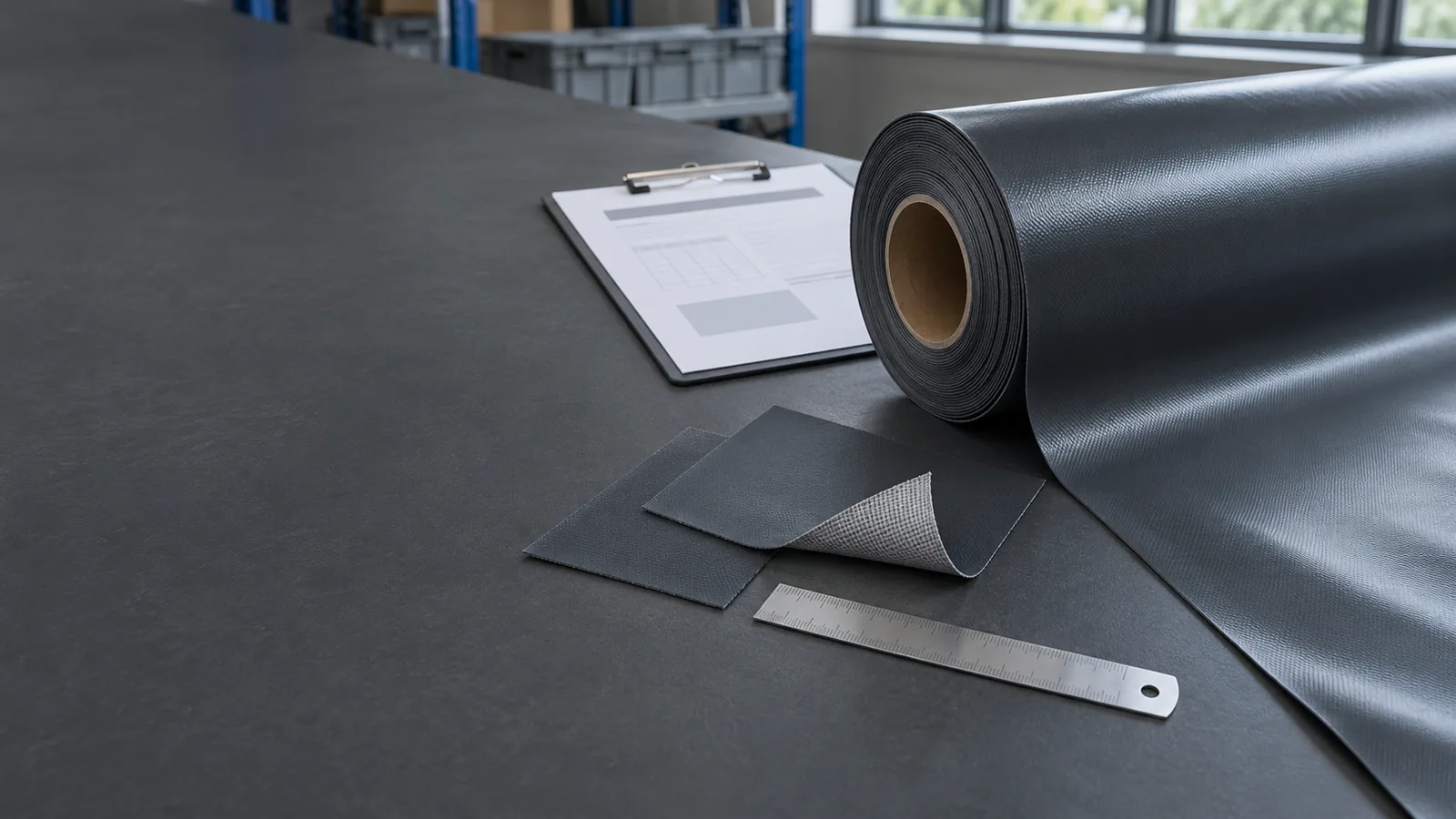
When comparing PVC tarpaulin, check the material construction, weight and thickness, test methods, and roll dimensions together. A useful data sheet identifies the proposed grade and gives you enough detail to decide what needs testing before a production order. Weight alone cannot establish whether a fabric will work for your application.
For a fabricator, the next step is to connect those fields to the product you make. A tent roof, truck cover, and flexible duct place different demands on the material and its seams.
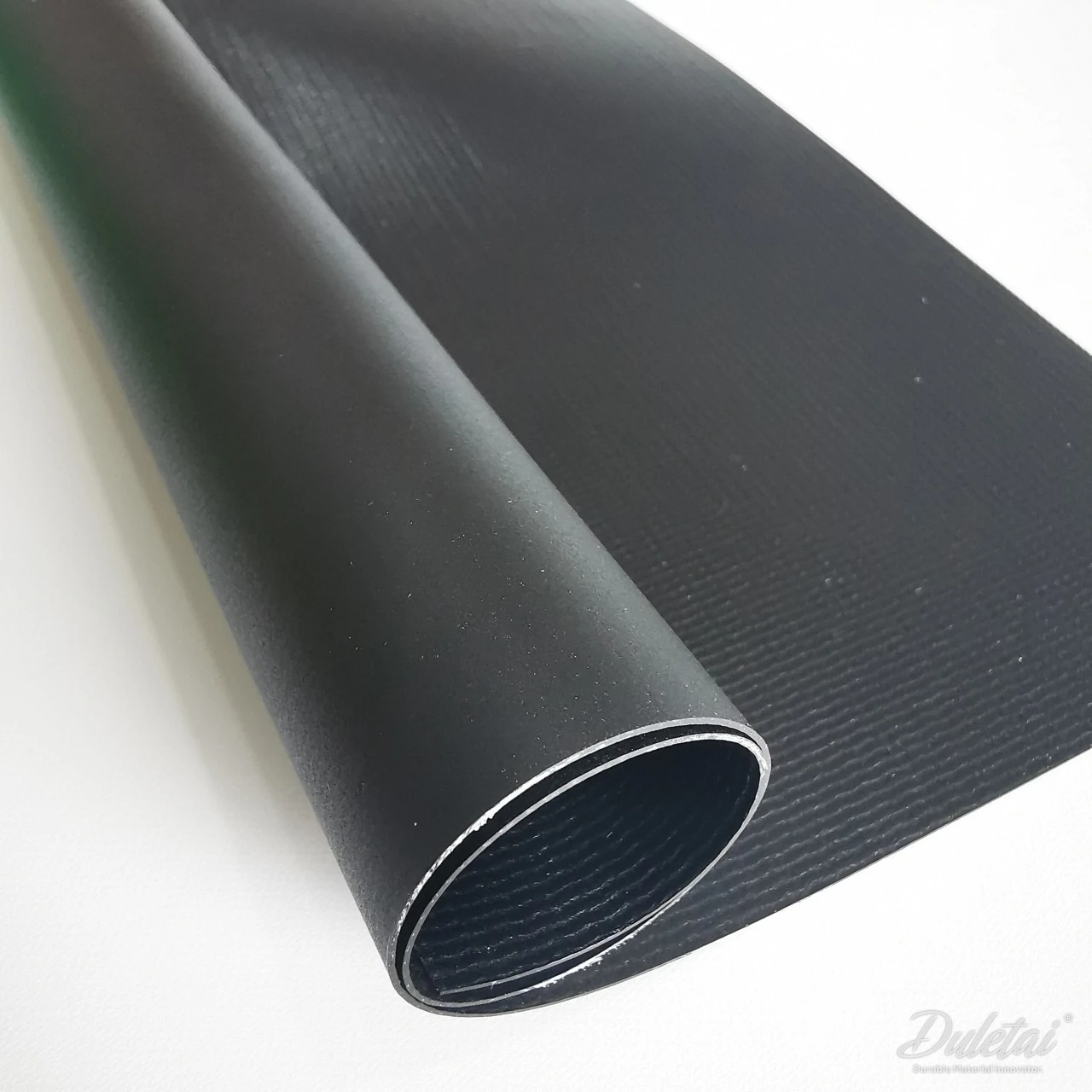
What to check on the data sheet
Start with the material identification
Confirm the model, data sheet revision, and configuration being quoted. Record the color, surface finish, and any requested treatment. If you receive a sample, check that it represents that same configuration.
A family name such as “PVC tent fabric” may cover several constructions. Ask which values apply to the proposed material and whether they are typical values, minimum requirements, or limits agreed for your order.
Read weight, thickness, and base fabric separately
GSM means grams per square meter: the mass of a given area of fabric. For a coated or laminated composite, the finished weight includes the reinforcement and the layers applied to it. It does not tell you how that weight is distributed through the construction.
Thickness describes a different property. Two fabrics with similar weight may have different reinforcement, surface layers, or thickness. Compare the construction before drawing conclusions from either number.
| Data sheet field | What to clarify before ordering |
|---|---|
| Finished weight | What is the nominal value, and what tolerance applies? |
| Thickness | How is it measured, and what variation is acceptable? |
| Base fabric | What fiber, yarn specification, and construction are used? |
| Coating or lamination | What layers and surface treatments are included? |
| Color and finish | Does the sample match the configuration being quoted? |
If the base fabric entry uses two yarn specifications or a construction such as “30 × 30,” ask the supplier to identify the directions and the units. A yarn designation or fabric count is not a finished-fabric strength result.
Compare strength values only when the test details match
Tensile strength, tear strength, and coating adhesion describe different behavior. Keep them in separate rows when comparing quotations.
For each result, request the test method, specimen direction, units, and relevant test conditions. A pair of figures needs clear direction labels. A value written only as “N” also needs enough information about the test specimen and method to interpret it.
Avoid ranking two materials from the larger number alone. If the methods or specimen details differ, ask for comparable results before using the figures to make a purchasing decision.
Check what the data sheet says about seams
Fabric properties help you select material for a trial. Your joining process and finished assembly need their own evaluation.
Use the proposed grade to make a representative seam or panel section. Record the equipment, settings, overlap, and preparation used. Include relevant edges and attachment details in the trial, then assess them against the requirements for your product.
Keep the approved sample with the agreed specification. If the material configuration changes, review whether the original trial still applies.
Match roll dimensions to your cutting plan
Confirm usable width, roll length, and dimensional tolerances. Include fabric direction and seam allowances in your layout, and check that your equipment can handle the proposed roll.
Put quotes in the same units before comparing them. For finished fabric weight, multiply ounces per square yard (oz/yd²) by 33.90575 to get grams per square meter (g/m²). For example, 18 oz/yd² is about 610 g/m². If a quote gives ounces per linear yard, ask for the fabric width so you can calculate the area.
For thickness or roll width, 1 in = 25.4 mm. For roll length, 1 yd = 0.9144 m. Keep the agreed units and tolerances on the purchase order so rounded conversions stay separate from the acceptance limits.
Ask for evidence behind special requirements
A listed flame-retardant or antistatic option needs clarification for the material you intend to buy. Specify the required test method and acceptance criteria, then ask which supporting report applies to that configuration.
Review the report’s material identification and tested sample. A general product description should not be used as confirmation that your proposed grade satisfies a particular project requirement.
What to send with your inquiry
Send the material model or sample reference, intended product, fabrication process, and required width and quantity. Include the performance requirements you need to meet, with test methods where specified.
Mark any missing data before approving the order. Your final purchasing specification should identify the material, agreed tolerances, required tests, and approved sample so both teams can check delivery against the same requirements.