
How to Calculate Usable Tarp Roll Width Before Cutting
Work out whether a panel fits across a tarp roll after edge trim, hems and seam allowances.
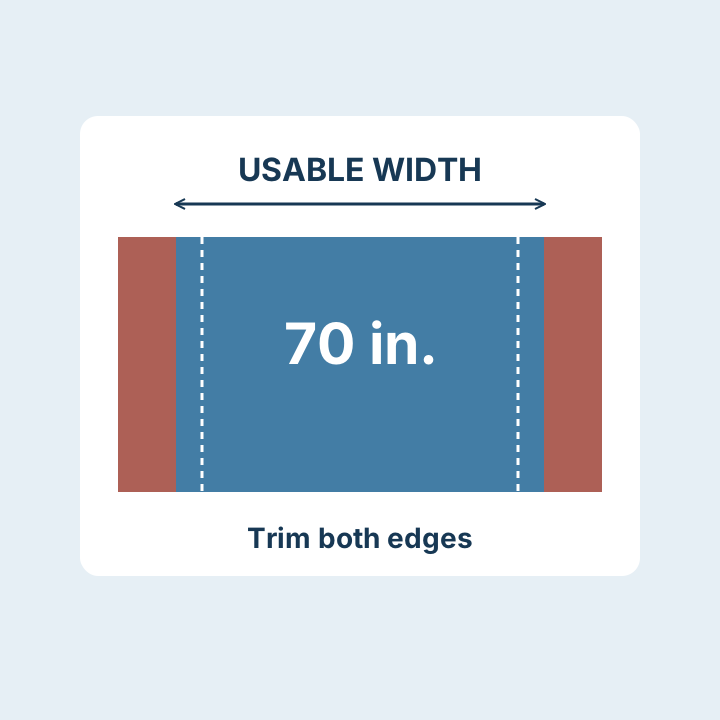
The usable width of a tarp roll is the width you can cut after allowing for edge trim and any unusable edge material. To find out whether a panel fits, compare that width with the panel’s cut dimension across the roll, including the material consumed by hems, seams or overlaps.
Start with the minimum supplied width
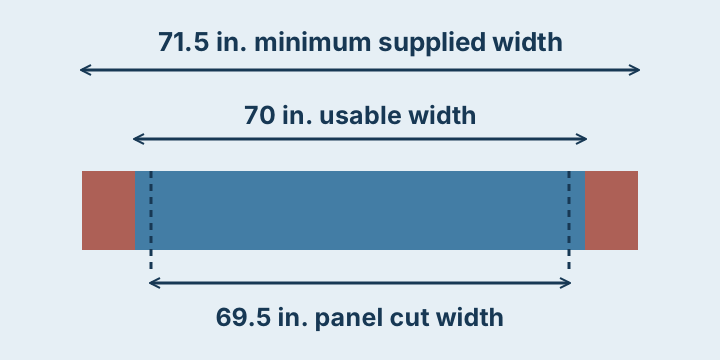
Suppose a supplier quotes a nominal width of 72 in. and will guarantee at least 71.5 in. across the roll. Your cutting plan removes 0.75 in. along each edge. You can plan around 70 in. of usable width: 71.5 − 0.75 − 0.75.
If the supplier already guarantees 70 in. of usable width after edge exclusions, use the guaranteed figure directly. Confirm what it excludes and subtract only trimming you will do in addition. For planning, use the smallest width guaranteed over the length you need.
Measure the panel at its cut edges
Suppose you need a 68 in. finished panel and each hem consumes 1.25 in. of fabric. The blank needs to be 70.5 in. wide. That is 0.5 in. wider than the example roll can supply after trimming. A 67 in. finished panel with the same hems needs 69.5 in. and leaves 0.5 in. across the usable width. Decide whether that margin gives your cutting process enough room.
| Width in the cutting plan | Where it comes from |
|---|---|
| Minimum supplied width | Supplier’s guaranteed lower limit before any exclusions you apply. |
| Usable roll width | Minimum supplied width minus the edge material you will remove. |
| Panel cut width | Finished dimension plus the allowances that consume fabric across the roll. |
| Remaining width | Usable width minus panel cut width and any spacing required by your process. |
Decide whether turning the panel is an option
Mark which edge of the drawing runs along the roll. If you rotate a panel, the required cross-roll dimension changes. So does the direction of the reinforcement relative to the panel. Confirm that the design permits the change, especially where the material data specifies different strength figures by direction or a specific face must be exposed.
When laying out several panels across the roll, add their cut widths and the spacing between them. If the layout does not fit, compare a wider roll or revise the panel arrangement. If adding a seam changes the design, check the seam position and overlap before releasing the cutting plan.
Put the usable width on the purchase order
When requesting a quote for PVC tarpaulin fabric in rolls, send a sketch marking the roll direction, finished width, cut width and trim assumptions. Ask for the minimum usable width in writing and confirm whether it applies along the full roll. Check the supplied material before cutting the production batch.