
Mesh vs. Solid Dump Truck Tarps: How to Choose the Right Fabric
Compare airflow, rain exposure and fit before choosing fabric for a dump truck tarp.
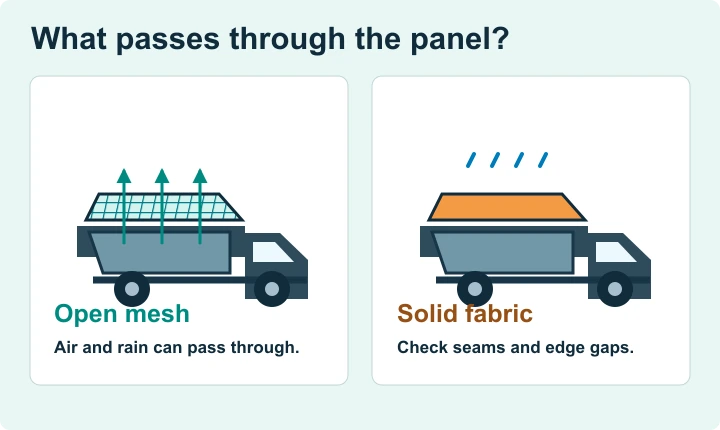
Start with what the tarp has to keep in or keep out. Open mesh lets air through the fabric and can help retain debris larger than its openings. Solid fabric has no open grid and is a candidate when blocking direct rain or containing smaller particles matters. On a finished cover, seams, side gaps and the area around the hardware also affect what can pass through.
Choose for the load and the conditions
| What you need to check | Open mesh | Solid fabric |
|---|---|---|
| Airflow through the panel | Air can pass through the openings. | A continuous panel restricts airflow through the fabric. |
| Loose or fine particles | Compare the openings with the smallest particles you need to retain. | Check gaps at the edges, fasteners and seams. |
| Rain exposure | Water can pass through the openings. | Check how the finished cover sheds water and how the seams and edges are built. |
| Fit on the truck | Check roll-up, tracking and the attachment points on the actual mechanism. | Run the same checks with a sample of the proposed weight and construction. |
A quarry hauling coarse aggregate may prioritize retaining loose pieces and checking fit on a roll-over system. An operator covering a load that must stay dry will want to look at the whole cover, including drainage, seam construction and gaps near the sides. For mixed loads, specify the smallest particles and the most demanding exposure the cover needs to handle. Confirm the covering requirements for the load and route with the responsible operator.
Match the material to the tarp mechanism
Identify the truck body, tarp system and attachment points before requesting a roll sample. Measure the width the cover actually needs to span and record how the existing tarp winds, tracks and clears the body and hardware. Plan the reinforcement, pocket or attachment detail where the fabric meets the mechanism.
If you're comparing different meshes, ask for the opening dimensions or an approved sample of the exact grade. Look at the finished panel as well as the roll material. A plain fabric swatch can show the openings and flexibility. An edge sample with the intended reinforcement and attachment shows how the parts meet where the mechanism pulls on them.
Give the supplier enough information to quote
- Send the type of load and describe which particles need to be retained and how much rain exposure matters.
- Include the truck body dimensions, tarp mechanism and the usable fabric width needed for your cutting pattern.
- Specify the finished edge construction and agree on what your fabrication trial needs to check.
If open mesh suits the job, use the DLT-BNM PVC-coated polyester mesh range to compare roll specifications and request the grade you want to trial. Check the sample against the planned cover and the truck's actual mechanism before approving the roll.